
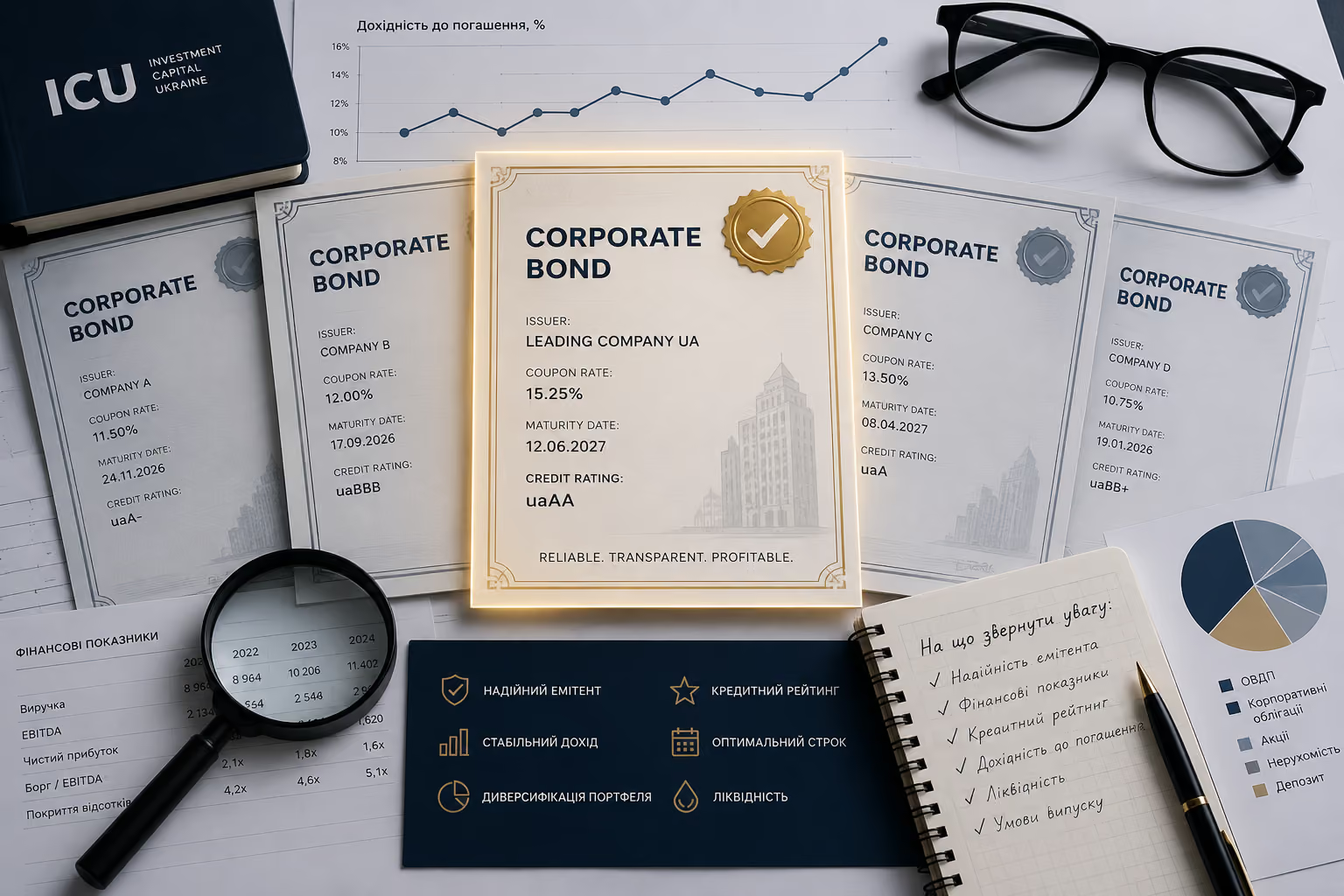
Corporate bonds are debt securities issued by private companies to raise capital for business development. By purchasing a corporate bond, an investor lends money to the issuing company, which undertakes to repay the bond's principal (face value) and make periodic interest (coupon) payments according to the terms of the issue.
Unlike government bonds, where you lend money to the state, corporate bonds allow you to finance private businesses.
Why Add Corporate Bonds to Your Portfolio?
If you already invest in Ukrainian government bonds (OVDP), you already have an income-generating fixed-income portfolio. However, your entire portfolio is exposed to a single issuer—the government.
Corporate bonds introduce a different asset class with a different risk profile and, in some cases, higher potential yields. They are not a replacement for government bonds but rather a complementary instrument that helps improve portfolio diversification and resilience.
Like government bonds, they provide predictable coupon payments and a transparent investment structure.
The Prospectus: The Most Important Document
The bond prospectus contains all key information about the issue, including payment schedules, maturity dates, issuer obligations, investor rights, and placement conditions.
Before investing, investors should carefully review the prospectus—or rely on a professional broker who has already performed this due diligence.
Private Placements vs Public Offerings
A significant share of Ukrainian corporate bonds are issued through private placements.
Private placements are offered exclusively to a predefined group of investors and cannot be distributed to the general public through investment apps or online platforms. These offerings are subject to simplified issuer requirements and lighter regulatory oversight.
Public offerings, on the other hand, are available to all investors through licensed brokers. Public issuers must comply with stricter disclosure requirements and enhanced regulatory supervision, making these securities generally more transparent and reliable.
Coupon Payments
Fixed-rate coupon
The coupon rate remains unchanged throughout the coupon period (typically one year) or for the entire life of the bond.
This option provides predictable income and is generally preferred by conservative investors.
Floating-rate coupon
The coupon is linked to a reference indicator such as the National Bank of Ukraine's policy rate, exchange rates, the UIRD index, or another benchmark specified in the prospectus.
Floating-rate bonds may generate higher returns when benchmark rates increase but can also produce lower income if rates decline.
Coupon Payment Frequency
Most Ukrainian corporate bonds pay coupons quarterly, while some pay semi-annually or annually.
Quarterly coupon payments are one of the key advantages of corporate bonds over government securities, providing investors with regular cash flow and greater flexibility for reinvestment.
Minimum Investment
Corporate bonds are typically available from a single bond, with a face value of approximately UAH 1,000.
This makes them significantly more accessible than certain private investment funds, where the statutory minimum investment often exceeds UAH 120,000.
Put Option (Early Redemption)
Many Ukrainian corporate bonds include a put option, allowing investors to sell the bond back to the issuer at par value on predetermined dates—typically once a year—before maturity.
A put option offers investors an opportunity to exit a long-term investment without incurring market losses associated with selling the bond below its purchase price.
Early Sale Without a Put Option
Besides issuer-sponsored put options, investors should also consider whether their broker offers liquidity by repurchasing bonds before maturity.
Although early redemption through a broker may involve additional costs, it provides greater flexibility and control over your investment should your financial circumstances change.
Who Issues Corporate Bonds?
The Ukrainian corporate bond market is dominated by banks and financial institutions, including lending and leasing companies.
Companies from the real economy—such as property developers, agricultural businesses, and retailers—issue corporate bonds less frequently.
By investing in corporate bonds, you provide financing that helps Ukrainian businesses grow and expand. Unlike investing in company shares, however, corporate bonds typically offer fixed returns with a lower level of investment risk.
How to Choose Corporate Bonds
When selecting corporate bonds, investors should evaluate several key factors:
- Issuer reliability and reputation
- Credit rating
- Investor protections
Guarantees
Most corporate bonds are unsecured, meaning they are not backed by specific collateral such as real estate or other assets. For this reason, the issuer's financial strength, reputation, and credit rating are among the most important factors to consider. Before investing, it is advisable to review the prospectus, analyze the issuer's financial performance, and assess its credit history.
Current Corporate Bond Opportunities Are Available in ICU Trade